4 JUNE 2010. This Spring has been a wonderfully busy and challenging time for our family and those we know and love. In recent days there have been sad events, but the hope of Christ continues to shine through the news that could otherwise lead to dispair.
Running on at the keyboard . . . .
A little more than a month ago, the husband of one of my wife's close friends committed suicide. He left a beautiful wife and family--three children under the age of 10. I pray that God comforts him in eternal peace and grants him generously the gift of His love, looking not on his acts in judgment, but with a Sacred Heart of compassion for what his poor soul must have endured to make suicide appear to be his only remaining option.
The Tallahassee Lay Dominican inquiry group continues to grow in devotion to our Lord as a community. I and my six fellow group members have completed the inquiry phase and wait anxiously for the next phase of candidacy to be approved by the Southern Province.
We hear news everyday that tar balls and the omnipresent oil slick is moving closer to coming ashore in Florida. Tallahassee is about an hour or so, due north, from the coast. The beaches in the panhandle of Florida are some of the most beautiful in the world, and it will be a terrible shame to see them desecrated with crude oil. However, our plight will likely be much less serious that the poor folks affected by the Deepwater Horizon disaster in Louisiana, Mississippi, and Alabama. I pray that all of those contributing to end this ongoing catastrophe will be guided by God's grace and will successfully and quickly bring the flow of oil into the beautiful Gulf of Mexico to a halt.
One of the deacons at our local parish suffered a very serious head injury over the Memorial Day weekend and is in very serious condition, in ICU, at our local hospital. I understand that our Bishop paid him a visit yesterday and although he is only in a state of semi-consciousness, he seems to have some awareness of visitors. I thank Bishop Ricard for his caring and loving pastoral approach. Please join our parish family in praying for Deacon Marcus and his family.
Another of my wife's dear friends has suffered two tragedies in the past weeks. Her husband became very ill and was rushed to the hospital, only to learn that he is severely diabetic and was suffering from acute pancreatitus. Now having been hospitalized for more than two weeks (much of that time in ICU), he is starting to show signs of improvement. But, last Sunday morning--Trinity Sunday--his mother-in-law (my wife's girlfriend's mother) had a severe stroke and died. The funeral is tomorrow, while our friend still remains in the hospital. Please pray for abundant grace to be showered upon this family and for the repose of the soul of a mother and grandmother who will be dearly missed.
On a joyous note, this Sunday our parish will host the first mass of Father Kevin McQuone, who will be ordained here in Tallahassee at the Co-Cathederal of Saint Thomas More tomorrow. Our diocese has been richly blessed by many ordinations of vibrant and faithful young men to the priesthood in recent years. In this Year for Priests especially--but, at any time and at all times--please pray for our priests.
I also pray for a peaceful resolution to the most recent conflict crisis in the Middle East.
On behalf of faithful Catholics from our diocese and all of Florida, and others of good will who may follow these pages, we offer Archbishop Wenski, installed as Archbishop of Miami on 1 June, a heartfelt and joyous welcome as our metropolitan archbishop. And, to now-retired Archbishop Favalora, a very gracious and warm "Thank you" for many years of his faithful and good service to all the faithful in Florida.
And, for followers of these pages in Florida (or elsewhere), please make sure to let Governor Charlie Crist know of your support of HB 1143 (the law passed by the Legislature this session requiring pre-abortion sonograms and preventing government money from being used to pay for abortions under the Obama Administration's recent health care overhaul law). Governor Crist has not yet vetoed or signed HB 1143 into law. He has the option of signing the bill or allowing the bill to become law without his signature. The scuttle here in Tallahassee is that he is leaning towards a veto, but I believe he can swayed if the silent majority of Floridians make their preference for life known to the Governor. The Florida Catholic Conference provides an easy way to make your wishes know to the Governor here.
To carry the previous point a bit farther . . . politically, it makes no sense for Governor Crist to veto HB 1143. If he did so, he would make the extreme left happy, but they are not going to vote for him in the upcoming general election anyway. On the other hand, if HB 1143 becomes law (by the Governor's signature or otherwise) those who were originally swayed to vote for him as the Republican candidate for governor four years ago may still see a principled man running for the U.S. Senate. (All lawyers in Tallahassee handicap statewide politics unfolding here, at least on a part-time basis.) In my novice political view, a veto stands no chance of gaining additional votes, but runs the real danger of further eroding Charlie's mainstream and conservative leaning support. It would be for me, personally, the death knell of my consideration to support him.
I pray that God will bless and keep all who find these pages.
04 June 2010


Saint Peter of Verona
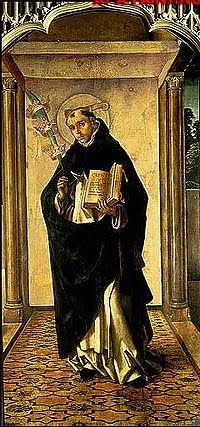
Peter was born in Verona, Italy in A.D. 1205, and later attended the University of Bologna, where tradition records that he maintained his orthodoxy in the faith and met Saint Dominic at the age of 15. Afterwards, Saint Peter joined the Order and became a noted preacher in Northern and Central Italy.
From the decade of A.D. 1230 onward, Saint Peter preached against heresy in Italy. In A.D. 1234, Pope Gregory IX appointed Saint Peter as the inquisitor for Northern Italy. In that role, it is said that Saint Peter evangelized the whole of Italy, preaching in Rome, Florence, Bologna, Genoa, and Como.
In A.D. 1251, in recognition of Saint Peter's strict adherence, austere lifestyle, and zeal for teaching, Pope Innocent IV appointed Peter the inquisitor of Lombardy. Although history does not record much in the way of official acts of Saint Peter in this role, there is one recorded declaration of clemency issued for those confessing heresy or sympathy for heresy.
Because Saint Peter preached effectively against heresy, a group of Cathars plotted to kill him, and hired an assasin--Carino of Balsamo--to accomplish the murderous task. On 6 April 1252, while Saint Peter was returning to Milan from Como along with another friar, Dominic, the assasin attacked the pair on a lonely spot near Barlassina, cutting off the top of Saint Peter's head with an ax and mortally wounding Friar Dominic. Saint Peter was killed in the attack and Friar Dominic died five days later in Meda, but history records that Saint Peter began reciting the Apostle's Creed as he was attacked, dying with a prayer on his lips.

Pope Innocent IV canonized Saint Peter on 25 March 1253, less than a year after his martyrdom, making Saint Peter of Verona the fastest papally canonized saint in the history of the Church.
post scriptum.--Carino of Balsamo, killer of Saint Peter, later confessed his crime and converted from heresy to the true faith. He was eventually accepted into the Dominican Order as a lay brother at the convent of Forli.
Prayer
Grant we beseech Thee,
O Almighty God, that with fitting devotion
we may follow the faith of blessed Peter,
Thy martyr,
who in the spreading of that same faith,
was found worthy to win the palm of martyrdom.
Through our Lord Jesus Christ, Thy Son,
Who liveth and reigneth with Thee in the unity of the Holy Ghost,
world without end.
Amen.
02 June 2010
Blessed Sadoc and Companions
2 JUNE 2010. Today we celebrate the feast day (optional memorial) of Blessed Sadoc,a friar and priest who, with his companions, was martyred in A.D. 1260.
Blessed Sadoc studied at the University of Bologna, Italy. He was a Dominican friar who received the habit from Saint Dominic de Guzman himself. At the General Chapter the Dominicans in Bologna in A.D. 1221, Blessed Sadoc was chosen to assist Master Paul of Hungary to establish a province in Hungary. Later, Blessed Sadoc moved to Poland where he served as preacher for nearly forty years. In A.D. 1260, Blessed Sadoc and his eight Dominican companions from Sandomierz were martyred by the Tartars as they were singing the Salve Regina at Compline. Hence, today Dominicans have a custom of signing the Salve Regina at the deathbed of members of the Order.
Prayer
Lord Jesus,
in the midst of fierce attacks of the foe
Blessed Sadoc and his companions
greeted the Virgin Mary in song
and received the longed-for palm of martyrdom.
After this exile may your merciful and loving Mother
show us to you,
who live and reign in the unity of the Holy Spirit,
one God, for ever and ever.
Amen.
Blessed Sadoc studied at the University of Bologna, Italy. He was a Dominican friar who received the habit from Saint Dominic de Guzman himself. At the General Chapter the Dominicans in Bologna in A.D. 1221, Blessed Sadoc was chosen to assist Master Paul of Hungary to establish a province in Hungary. Later, Blessed Sadoc moved to Poland where he served as preacher for nearly forty years. In A.D. 1260, Blessed Sadoc and his eight Dominican companions from Sandomierz were martyred by the Tartars as they were singing the Salve Regina at Compline. Hence, today Dominicans have a custom of signing the Salve Regina at the deathbed of members of the Order.
Prayer
Lord Jesus,
in the midst of fierce attacks of the foe
Blessed Sadoc and his companions
greeted the Virgin Mary in song
and received the longed-for palm of martyrdom.
After this exile may your merciful and loving Mother
show us to you,
who live and reign in the unity of the Holy Spirit,
one God, for ever and ever.
Amen.
31 May 2010
Feast of the Visitation of the Blessed Virgin Mary

Mary set out(Lk 1, 39-56)
and traveled to the hill country in haste
to a town of Judah,
where she entered the house of Zechariah
and greeted Elizabeth.
When Elizabeth heard Mary’s greeting,
the infant leaped in her womb,
and Elizabeth, filled with the Holy Spirit,
cried out in a loud voice and said,
“Most blessed are you among women,
and blessed is the fruit of your womb.
And how does this happen to me,
that the mother of my Lord should come to me?
For at the moment the sound of your greeting reached my ears,
the infant in my womb leaped for joy.
Blessed are you who believed
that what was spoken to you by the Lord
would be fulfilled.”
And Mary said:
“My soul proclaims the greatness of the Lord;
my spirit rejoices in God my Savior,
for he has looked with favor on his lowly servant.
From this day all generations will call me blessed:
the Almighty has done great things for me,
and holy is his Name.
He has mercy on those who fear him
in every generation.
He has shown the strength of his arm,
he has scattered the proud in their conceit.
He has cast down the mighty from their thrones,
and has lifted up the lowly.
He has filled the hungry with good things,
and the rich he has sent away empty.
He has come to the help of his servant Israel
for he has remembered his promise of mercy,
the promise he made to our fathers,
to Abraham and his children for ever.”
Mary remained with her about three months
and then returned to her home.
Today's feast originated with the Franciscan Order in the medieval period. Originally, the feast was recommended by Saint Bonaventure, after which it was adopted and spread by Franciscan religious throughout Europe. In A.D. 1389, Pope Urban VI, as a part of his efforts to end the Great Western Schism, inserted the feast on the General Roman Calendar and assigned it to the date of 2 July. Today's feast continued to be celebrated on 2 July, until A.D. 1969 when Pope Paul VI moved it to today's date--31 May--to harmonize better with the Gospel account by falling between the Solemnity of the Annunciation of the Lord (25 March) and the Solemnity of the Nativity of Saint John the Baptist (24 June).
I pray that all of us today, in our commemoration of this feast, will also keep hearts that leap for joy at the sound of Mary's greeting to us, her children on earth, beckoning us to draw closer to Her immaculate heart and the Sacred Heart of her Son, our Lord Jesus Christ.
30 May 2010
SOLEMNITY OF THE MOST HOLY TRINITY

Today's readings can be found here. Consider God the Father, the God of the Old Testament, who is creator of all the universe. However, we know from Saint John that in the beginning, there was the Word: "In the beginning was the Word, and the Word was with God, and the Word was God." (Jn 1, 1) Consider too our Lord Jesus Christ, the only begotten Son of God, light from light, true God from true God--the Word incarnate in our world; poured out on us for our salvation because of the abundance of God's love. Finally, consider the Holy Spirit, begotten of the Father and the Son, our advocate in the world who continues to provide the abundance of God's love for us, and the blessings He bestows on us, until our Lord Jesus Christ comes again at the end of the world.
In the sacraments, to this day, the Church follows the great trinitarian commission given to her by Christ Himself: "Go, therefore, and make disciples of all nations, baptizing them in the name of the Father, and of the Son, and of the holy Spirit, teaching them to observe all that I have commanded you." (Mt 28, 19-20)
Go too and preach by your actions, by your lives, by your love, the love of God, the Father, Son, and Holy Spirit, three persons in one triune God--the Holy Trinity.
NOVUS: Our parish priest, Father Will Ganci, today gave an outstanding homily around the theme of perichoresis--an early term of some Church fathers used to describe the internal life of the Most Holy Trinity. Saint John of Damascus explored the idea of perichoresis in depth and described it as the mutual inter-penetration and indwelling of the three persons of God. The Father is eternally giving life to the Son and penetrating the life of the Son as the Son penetrates the life of the Father, each indwelling one in the other, and, together, penetrating and dwelling in the Holy Spirit. And, as Father Will relayed today, perichoresis, literally translated means "to dance."
What a beautiful image of the three persons of the Most Holy Trinity--at one, each in the other, and each penetrating the other in love--as a dance. Not a dance of human origin with some carnal or other physical object, but a dance--an eternal and life-giving, poetic union--of the three persons of God, together for the love of God for Himself and for the bountiful love of humanity upon which the Father, Son, and Holy Spirit pours out Himself without end.
29 May 2010
Blessed William Arnaud

History has not preserved information about Blessed Willaim's early life; however, we do know that in A.D. 1234 he and two other Dominicans were commissioned as inquistors by Pope Gregory IX to combat the heresy of Albigensianism in France. As Blessed William and his companions fought the heresy, they were driven from Toulouse, Narbonne, and several other French towns.
What follows is an account of Blessed William's martyrdom
After the death of Saint Dominic, the party of Count Raymond of Toulouse rose to power again. In a short time it regained possession of Toulouse and several armed strongholds nearby. When William Arnaud and his companions came into the vicinity, they found every gate closed against them. None of the cities under the command of Raymond's troops would allow them to come in, and, by order of the heretic commander, the citizens of Toulouse were forbidden under pain of death to supply the inquisitor's party with any food. They took refuge in a farmhouse outside of Avignonet and preached around the countryside for some time. Because they had some measure of success, the heretics intensified their efforts to entrap and kill the inquisitors.
The members of the commission realized that they were only one step from death. They might have escaped and gone safely to some other part of the country had they chosen to do so. Instead, they remained where obedience had assigned them, and at the end of May 1242, they were given a heavenly warning that they were about to receive the crown of martyrdom. William was absent from the rest of the group when the plot was formed to kill them. Being told of a vision of martyrdom by one of the brothers, he hurried back to rejoin his group. The heretics completed their plans to massacre the entire party.
Scheming carefully, they set the scene at the country castle of one of the wealthy members of their group. In order to make sure of getting the inquisitors into the trap, they sent word to William that a confirmed heretic of his acquaintance wished to abjure his heresy and return to the faith.
Knowing well that it was a trap, William still could not refuse to go. He and his eleven companions went, on the evening of the Ascension, May 28, to the castle of Count Raymond VII of Toulouse. The soldiers of Raymond were concealed in the great hall. They fell upon the helpless group and killed all but four of the members. These four were taken out by friends who had know about the plot and hurried to the church.
William Arnaud and Steven of Narbonne were murdered in the sanctuary of the church as they sang the Te Deum. This was a crime almost unparalleled in medieval times when the right of sanctuary was one of the few strongholds against barbarism. The bodies of the martyrs were thrown into a deep ravine, and rocks were rolled down on them. During the night, some hours after the martyrdom, bright lights radiating from the bodies of the martyrs brought the faithful to gather up the relics.
The church of Avignonet was placed under interdict because of the sacrilege, and for 40 years no Mass was said there. The doors remained closed. Finally, when the interdict was lifted, the bells rang of themselves, according to legend, to let people know that Avignonet was once more a member of the living Church.
There is a curious footnote to this story of martyrdom. Shortly after the interdict was lifted, there appeared one day on the steps of the church a fairly large statue of the Blessed Virgin. Who had put it there has never been discovered. It is difficult to see how anyone in such a small town could have successfully concealed a statue of that size, for small towns are notoriously poor places to hide secrets. The statue appeared on the steps in broad daylight, yet no one saw it being placed there. The people took it as a sign that they were forgiven for their part in the outrage, and also as a sign that they should rebuild the devotion to Our Lady, which the Dominicans had preached. The statue was named "Our Lady of Miracles," and they petitioned for a special feast in honor of their own Miracle lady.
Until very recently, a strange little ceremony was held in the Church of Our Lady of Miracles on every May 28. It was a night ceremony, in memory of the night martyrdom of William Arnaud and his companions, and it was called "The Ceremony of the Vow." Carrying lighted candles, the people proceeded across the entire width of the church on their knees, praying for forgiveness for the people who committed the massacre (Benedictines, Delaney, Dorcy). Blessed William Arnaud is invoked by people who suffer from neuralgia, in memory of a miracle of healing which he performed on one of the sisters of Prouille (Dorcy).
24 May 2010
Translation of our Holy Father Dominic

Saint Dominic died at Bologna on 6 August 1221, and was buried at the Church of Saint Nicholas of the Vineyards at Bologna. After his death, many people claimed to be healed at Father Dominic's tomb, but the other members of the Order were reluctant to acknowledge miracles, in fear of arousing superstition. However, at the urging of Pope Gregory IX, Saint Dominic's remains were moved to a simple marble sarcophagus. This translation of Saint Dominic's remains occurred on Pentecost Tuesday, 24 May 1233, and began officially Father Dominic's canonization process. Saint Dominic was canonized on 3 July 1234, by Pope Gregory IX.
In A.D. 1267, Saint Dominic's remains were translated a second time to their present resting place at the Basilica of Saint Dominic in Bologna.
23 May 2010
Prayer for Chastity

By Saint Thomas Aquinas
and, above all others, that of chastity, depends
on the powerful action of your divine Providence;
I know that without You a creature can do nothing.
This is why I beseech You to defend, by Your grace,
the purity of my soul and of my body.
And if I have ever received any impression whatsoever
of a sentiment capable of soiling this ineffable virtue,
O supreme Master of my faculties,
blot it out from my soul, that with a clean heart,
I may advance in Your love and in Your service,
offering myself chaste all the days of my life
on the most pure altar of Your divinity.
It is the Cross that I adore.
The Cross of the
Lord is with me.
The Cross is my refuge.
Amen.
SOLEMNITY OF PENTECOST

When the time for Pentecost was fulfilled, they were all in one place together. And suddenly there came from the sky a noise like a strong driving wind, and it filled the entire house in which they were. Then there appeared to them tongues as of fire, which parted and came to rest on each one of them. And they were all filled with the Holy Spirit and began to speak in different tongues, as the Spirit enabled them to proclaim.
Now there were devout Jews from every nation under heaven staying in Jerusalem. At this sound, they gathered in a large crowd, but they were confused because each one heard them speaking in his own language. They were astounded, and in amazement they asked, “Are not all these people who are speaking Galileans? Then how does each of us hear them in his native language? We are Parthians, Medes, and Elamites, inhabitants of Mesopotamia, Judea and Cappadocia, Pontus and Asia, Phrygia and Pamphylia, Egypt and the districts of Libya near Cyrene, as well as travelers from Rome, both Jews and converts to Judaism, Cretans and Arabs, yet we hear them speaking in our own tongues of the mighty acts of God. They were all astounded and bewildered, and said to one another, "What does this mean?" But others said, scoffing, "They have had too much new wine."
Then Peter stood up with the Eleven, raised his voice, and proclaimed to them, "You who are Jews, indeed all of you staying in Jerusalem. Let this be known to you, and listen to my words. These people are not drunk, as you suppose, for it is only nine o'clock in the morning. No, this is what was spoken through the prophet Joel:
'It will come to pass in the last days,'
God says,
'that I will pour out a portion of my spirit
upon all flesh.
Your sons and your daughters
shall prophesy,
your young men shall see visions,
your old men shall dream dreams.
Indeed, upon my servants and my
handmaids
I will pour out a portion of my spirit in
those days,
and they shall prophesy.
And I will work wonders in the heavens
above
and signs on the earth below:
blood, fire, and a cloud of smoke.
The sun shall be turned to darkness,
and the moon to blood,
before the coming of the great and
splendid day of the Lord,
and it shall be that everyone shall be
saved who calls on the name of
the Lord.'
You who are Israelites, hear these words. Jesus the Nazorean was a man commended to you by God with mighty deeds, wonders, and signs, which God worked through him in your midst, as you yourselves know. This man, delivered up by the set plan and foreknowledge of God, you killed, using lawless men to crucify him. But God raised him up, releasing him from the throes of death, because it was impossible for him to be held by it. For David says of him:
'I saw the Lord ever before me,
with him at my right hand I shall not
be disturbed.
Therefore my heart has been glad and my
tongue has exulted;
my flesh, too, will dwell in hope,
because you will not abandon my soul
to the netherworld,
nor will you suffer your holy one to
see corruption.
You have made known to me the paths of
life;
you will fill me with joy in your
presence.'
My brothers, one can confidently say to you about the patriarch David that he died and was buried, and his tomb is in our midst to this day. But since he was a prophet and knew that God had sworn an oath to him that he would set one of his descendants upon his throne, he foresaw and spoke of the resurrection of the Messiah, that neither was he abandoned to the netherworld nor did his flesh see corruption. God raised this Jesus; of this we are all witnesses. Exalted at the right hand of God, he received the promise of the holy Spirit from the Father and poured it forth, as you (both) see and hear. For David did not go up into heaven, but he himself said:
'The Lord said to my Lord,
"Sit at my right hand
until I make your enemies your
footstool."'
Therefore let the whole house of Israel know for certain that God has made him both Lord and Messiah, this Jesus whom you crucified."
Now when they heard this, they were cut to the heart, and they asked Peter and the other apostles, "What are we to do, my brothers?" Peter (said) to them, "Repent and be baptized, every one of you, in the name of Jesus Christ for the forgiveness of your sins; and you will receive the gift of the holy Spirit. For the promise is made to you and to your children and to all those far off, whomever the Lord our God will call." He testified with many other arguments, and was exhorting them, "Save yourselves from this corrupt generation." Those who accepted his message were baptized, and about three thousand persons were added that day.
They devoted themselves to the teaching of the apostles and to the communal life, to the breaking of the bread and to the prayers. Awe came upon everyone, and many wonders and signs were done through the apostles. All who believed were together and had all things in common; they would sell their property and possessions and divide them among all according to each one's need. Every day they devoted themselves to meeting together in the temple area and to breaking bread in their homes. They ate their meals with exultation and sincerity of heart, praising God and enjoying favor with all the people. And every day the Lord added to their number those who were being saved.(Acts 2, 1-47)
The Holy Spirit is God-with-us for all time until the end of the world. To have received the Holy Spirit means to live in accord with the commandments of Jesus--both the old law and the new law which He came to proclaim. So, praise the Holy Spirit! Offer all homage and worship, thanksgiving and praise, joy and hope to the Lord our God who has so generously provided for his beloved, but sinful creation. Let that adoration ring out in the works that we do and in the way that we live our lives.
21 May 2010
Blessed Hyacinth Mary Cormier

What follows is the biography of Blessed Hyacinth (Henry) that is available from the Dominican Order:
Henry Cormier was born in Orleans on the Feast of the Immaculate Conception in 1832. All his life he treasured the thought that he had been born on Our Lady's day, and therefore he should be especially devoted to her. His father died while he was still a small child, so Henry and his only brother, Eugene, went with their mother to live near his uncle, who was a priest in Orleans. The two boys entered the new preparatory seminary at Orleans. The following year Eugene died, leaving Henry alone and grief stricken.
Henry continued his studies for the priesthood at the major seminary of Orleans, and was ordained in 1856. At this time he fulfilled a desire that had been growing on him for some time; he went to Flavigny, where Father Lacordaire had opened a novitiate of the Order, and begged to be admitted. He was accepted, a little dubiously as he looked so delicate, and given the name Hyacinth.
When it was time for Brother Hyacinth's profession, the doubt had grown into a certainty; he had had several hemorrhages, and the community, which had already lost some of its most promising members from tuberculosis, was afraid to profess him. The master general, Father Jandel, took him to Rome as secretary and asked the pope for a special dispensation to allow him to make profession. The pope responded that if he went for thirty days without a hemorrhage he could make his vows. Young Brother Hyacinth tried hard once he got as far as 29 days and did not quite make it, but he fell seriously ill and was anointed. In the belief that he was going to die in a few days, he was finally allowed to make his profession. But at this point he recovered, and he served the Order vigorously for fifty years.
In 1865 the old Province of Toulouse was to be re established, and Father Cormier was sent as the first provincial to build up the Order there. His ability for administration was so marked that the pope wanted to make him a cardinal; only the hostility of France towards religious kept him from doing so.Blessed Hyacinth, pray for us!
When Father Cormier was elected master general in 1904, it became necessary to replace him in some of the work he had been doing so that he could devote more time to affairs of the Order in general. It was then that his brethren found out what a load he had been carrying. Teaching and writing should have kept him busy; but he also was regular confessor to eight large convents and extraordinary confessor to several more. In spite of all the activity, he spent hours of every day in front of the Blessed Sacrament. He had a universal reputation for the soundness of his spiritual direction.
As master general, Father Cormier turned his attention first to the novices. Many of his writings had been for young people, and he always loved the novices on whom the future of the Order depends. As gentle as a child in his manner, but as inflexible as a Gibraltar in a matter of principle, he quietly demonstrated the policies that he wanted followed in the Order. He founded the Angelicum, the international house of studies at Rome, and supported other educational projects of the Order.
Father Cormier wrote incessantly, mostly devotional works or instructions for novices. Some of his works have been translated into English, but not by any means all of them. He wrote biographies of many eminent Dominicans, including Blessed Raymond of Capua and Father Jandel. His pen helped to make permanent the work done by Father Lacordaire and his companions in re establishing the Order in France and in the world. Father Cormier died in Rome in 1916 and was beatified by Pope John Paul II in 1995.
20 May 2010
Installation Mass Coverage Announced

Word from Archbishop Wenski's former Diocese of Orlando is that they are saddened to see him go, although his involvement in more national issues (i.e., immigration reform), gave the general impression there that he would one day get a promotional call to the pallium. However, Archbishop-elect Wenski's move from the I-4 corridor to the tropics of South Florida is not an unknown journey for him. He served as Auxiliary Bishop in
And, a note of thanksgiving: the Archdiocese of Miami has been blessed to have had the gentle and constant leadership of Archbishop Favalora since 1994. A native of New Orleans, Archbishop Favalora will be missed by Catholics across the state.
More to follow as it develops.
18 May 2010
Pope Saint John I

Saint John was, while still an archdeacon, elected the Bishop of Rome in A.D. 523 at, what for that time, was an advanced age. Hailing from Siena in the Italian region of Tuscany, the Holy Father was born in about A.D. 470, and was noted to be frail at the time of his election.
After election as the Pope, the Arian king Theodoric the Great sent the Holy Father with a delegation of senators to Constantinople to secure a moderation of the Emperor Justin's decree (A.D. 523) against the Arians, threatening the Holy Father that retribution would be swift if he was not successful. Tradition tells that the Emperor prostrated himself before the Holy Father when he first met him, and had himself crowned by Saint John. However, after failing to persuade a moderation in the Arian decree (which he attempted by an appeal to gentleness and discretion), Saint John returned to Ravenna (Theodoric's capital), where he was arrested under suspicion of having conspired with Emperor Justin.
After his imprisonment, the Holy Father suffered from neglect and maltreatment and died while still in prison. After his death on 18 May 526, the Holy Father's body was transported to Rome and buried beneath Saint Peter's Basilica.
Pope Saint John I, pray for us!
Subscribe to:
Posts (Atom)


 Posts
Posts

